
Master IGCSE Biology — from your very first cell to your final exam
Clear, jargon-free lessons build your confidence from Form 1 fundamentals all the way to Form 4 exam precision — so you understand the biology, not just the answers.

I don't teach Biology so you can pass a test — I teach it so the living world starts to make sense to you, and the test becomes the easy part.
— Renstay College
What you'll learn
What you'll be able to do
- Explain all core IGCSE Biology concepts — from cell structure and enzymes to genetics and ecosystems — with exam-level accuracy
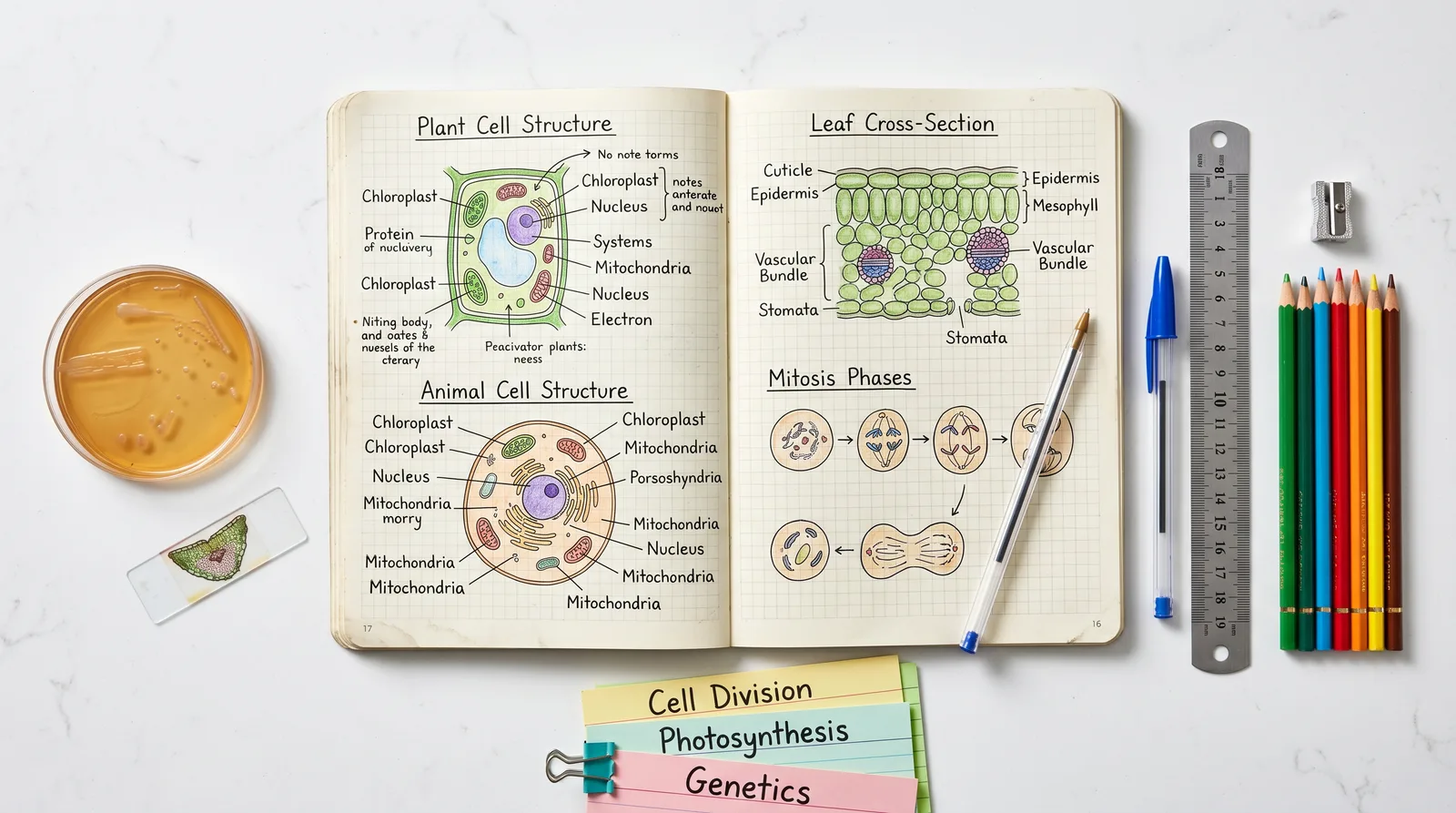
- Interpret and draw biological diagrams, graphs, and data tables confidently in the style demanded by IGCSE mark schemes
- Apply knowledge of human physiology (digestion, respiration, circulation, coordination) to explain how the body works as a system
- Describe and evaluate experimental methods and safely discuss how key Biology practicals are designed and controlled
- Use correct scientific vocabulary and respond precisely to command words (state, explain, describe, evaluate) across all paper types
- Approach IGCSE Biology past-paper questions strategically, knowing how marks are allocated and how to avoid common examiner pitfalls
How it works
A school that adapts to you
This isn't a set of static videos. Every lesson is generated live and tuned to where you actually are.
We learn your level
A quick placement check tailors your starting point so you're never bored or lost.
Lessons adapt as you go
Each lesson is written for your pace and your goal, adjusting as your skills grow.
Your AI coach keeps you moving
Checkpoints, feedback, and gentle nudges turn progress into a real result.
The curriculum
What's inside your school
27 modules · 102 lessons
Characteristics & Classification of Living Things
Establishes the foundation of biology by exploring what life is, how organisms are classified, and how to use biological keys.
- 1.1The Seven Characteristics of LifeIncluded
- 1.2Levels of OrganisationIncluded
- 1.3The Five KingdomsIncluded
- 1.4Vertebrates & InvertebratesIncluded
- 1.5Dichotomous KeysIncluded
Cell Biology & Microscopy
Covers cell structure, the differences between cell types, and the practical skills of microscopy central to IGCSE Biology.
- 2.1Plant vs. Animal CellsIncluded
- 2.2Specialised CellsIncluded
- 2.3Prokaryotic vs. Eukaryotic CellsIncluded
- 2.4Using a Light MicroscopeIncluded
- 2.5Diffusion, Osmosis & Active TransportIncluded
Biological Molecules, Enzymes & Nutrition
Explores the chemistry of life — carbohydrates, proteins, fats, and enzymes — and links these to nutrition in plants and humans.
- 3.1Carbohydrates, Lipids & ProteinsIncluded
- 3.2Food TestsIncluded
- 3.3Enzymes — Structure & ActionIncluded
- 3.4Factors Affecting Enzyme ActivityIncluded
- 3.5Human Nutrition & the Balanced DietIncluded
- 3.6PhotosynthesisIncluded
- 3.7Leaf Structure & AdaptationsIncluded
Human Physiology — Body Systems
Systematically covers digestion, respiration, circulation, excretion, and coordination so students can explain the body as an integrated system.
- 4.1The Digestive SystemIncluded
- 4.2Absorption & AssimilationIncluded
- 4.3Aerobic & Anaerobic RespirationIncluded
- 4.4The Gas Exchange SystemIncluded
- 4.5The Circulatory System — Heart & Blood VesselsIncluded
- 4.6Blood & LymphIncluded
- 4.7Excretion & the KidneysIncluded
- 4.8The Nervous SystemIncluded
- 4.9Hormones & the Endocrine SystemIncluded
- 4.10Homeostasis — Blood Glucose & TemperatureIncluded
Reproduction, Genetics & Variation
Covers sexual and asexual reproduction, inheritance, DNA, and variation from cell division through to genetic crosses.
- 5.1Cell Division — Mitosis & MeiosisIncluded
- 5.2Sexual & Asexual ReproductionIncluded
- 5.3Human Reproductive SystemsIncluded
- 5.4DNA, Genes & ChromosomesIncluded
- 5.5Monohybrid Inheritance & Genetic CrossesIncluded
- 5.6Codominance, Sex Linkage & Inherited DisordersIncluded
- 5.7Variation, Mutation & Natural SelectionIncluded
Ecology, Disease & Experimental Skills
Brings together ecosystems, disease, biotechnology, and the practical and exam-strategy skills needed to maximise marks on IGCSE papers.
- 6.1Ecosystems, Food Webs & Energy FlowIncluded
- 6.2Nutrient Cycles — Carbon & NitrogenIncluded
- 6.3Human Impact on the EnvironmentIncluded
- 6.4Disease — Pathogens, Immunity & AntibioticsIncluded
- 6.5Biotechnology & Genetic EngineeringIncluded
- 6.6Practical Skills & Experimental DesignIncluded
- 6.7Exam Technique & Command Word MasteryIncluded
Characteristics and classification of living organisms
- 7.1Characteristics of living organismsIncluded
- 7.2Concept and uses of classification systemsIncluded
- 7.3Features of organismsIncluded
Organisation of the organism
- 8.1Cell structureIncluded
- 8.2Size of specimensIncluded
Movement into and out of cells
- 9.1DiffusionIncluded
- 9.2OsmosisIncluded
- 9.3Active transportIncluded
Biological molecules
- 10.1Biological moleculesIncluded
Enzymes
- 11.1EnzymesIncluded
Plant nutrition
- 12.1PhotosynthesisIncluded
- 12.2Leaf structureIncluded
Human nutrition
- 13.1DietIncluded
- 13.2Digestive systemIncluded
- 13.3Physical digestionIncluded
- 13.4Chemical digestionIncluded
- 13.5AbsorptionIncluded
Transport in plants
- 14.1Xylem and phloemIncluded
- 14.2Water uptakeIncluded
- 14.3TranspirationIncluded
- 14.4TranslocationIncluded
Transport in animals
- 15.1Circulatory systemsIncluded
- 15.2HeartIncluded
- 15.3Blood vesselsIncluded
- 15.4BloodIncluded
Diseases and immunity
- 16.1Diseases and immunityIncluded
Gas exchange in humans
- 17.1Gas exchange in humansIncluded
Respiration
- 18.1RespirationIncluded
- 18.2Aerobic respirationIncluded
- 18.3Anaerobic respirationIncluded
Excretion in humans
- 19.1Excretion in humansIncluded
Coordination and response
- 20.1Coordination and responseIncluded
- 20.2Sense organsIncluded
- 20.3HormonesIncluded
- 20.4HomeostasisIncluded
- 20.5Tropic responsesIncluded
Drugs
- 21.1DrugsIncluded
Reproduction
- 22.1Asexual reproductionIncluded
- 22.2Sexual reproductionIncluded
- 22.3Sexual reproduction in plantsIncluded
- 22.4Sexual reproduction in humansIncluded
- 22.5Sex hormones in humansIncluded
- 22.6Sexually transmitted infectionsIncluded
Inheritance
- 23.1Chromosomes, genes and proteinsIncluded
- 23.2MitosisIncluded
- 23.3MeiosisIncluded
- 23.4Monohybrid inheritanceIncluded
Variation and selection
- 24.1VariationIncluded
- 24.2Adaptive featuresIncluded
- 24.3SelectionIncluded
Organisms and their environment
- 25.1Energy flowIncluded
- 25.2Food chains and food websIncluded
- 25.3Nutrient cyclesIncluded
- 25.4PopulationsIncluded
Human influences on ecosystems
- 26.1Food supplyIncluded
- 26.2Habitat destructionIncluded
- 26.3PollutionIncluded
- 26.4ConservationIncluded
Biotechnology and genetic modification
- 27.1Biotechnology and genetic modificationIncluded
- 27.2BiotechnologyIncluded
- 27.3Genetic modificationIncluded
Who it's for
Is this you?

The Form 1 Beginner
Just starting secondary school biology and wants a clear, friendly foundation — from cells and classification to understanding what 'living' actually means.

The Form 4 Exam Candidate
Cambridge exams are on the horizon and they need to sharpen their command-word precision, close content gaps, and practise the strategic thinking that earns top marks.

The Struggling Middle-Schooler
Finds biology confusing or dry and needs the kind of real-world analogies and patient explanations that finally make topics like enzymes and osmosis click.

The Supportive Parent
Wants to understand what their child is learning well enough to help at home — and needs a trustworthy, syllabus-aligned resource they can rely on.

The Private Tutor
Looking for a rigorous, well-structured resource that aligns tightly with the IGCSE syllabus and can be used to fill student knowledge gaps topic by topic.

The Naturally Curious Student
Loves science and wants to go beyond rote learning — eager to understand how genetics, ecosystems, and the human body actually work as interconnected systems.
Questions
Frequently asked
Your teacher
A note from your teacher
Renstay College
If you've ever stared at a Biology question and thought, "I revised this — so why can't I answer it?" — I want you to know that feeling is more common than you think, and it's not a reflection of how smart you are. It's usually a sign that the concept was explained in a way that made sense in the moment but didn't really land. That's exactly the gap this school is built to close.
I designed IGCSE Biology Lab because I know what it feels like to sit in front of a syllabus that looks like a wall of words. Cells, enzymes, osmosis, the Krebs cycle, genetic crosses — topic after topic, each one demanding a different kind of thinking. It can feel overwhelming. But here's what I've seen over and over again: when you approach Biology the right way — starting with genuine understanding, using the right analogies, and then connecting that understanding to exam language — everything becomes manageable. More than manageable. It becomes interesting.
So that's exactly what I've built here. We start where you are — whether that's Form 1 and the seven characteristics of life, or Form 4 and the finer points of codominance and sex linkage. Every explanation is built around clarity first. We use everyday comparisons to anchor ideas before we introduce the technical vocabulary. And we never move on until the concept makes sense, not just the definition. By the time we get to exam technique, command words, and mark-scheme thinking, you've got something solid underneath you — real understanding that you can work with under pressure.
Practical skills, diagrams, data interpretation, experimental design — these aren't afterthoughts here. They're woven into every part of the course because they're woven into every part of the exam. I want you to be the student who looks at a graph question or a six-mark explain question and knows exactly what to do. Not because you've memorised a formula, but because you understand the biology.
Whether you're a student chasing top grades, a parent looking for something you can trust, or a tutor who wants a rigorous, syllabus-true resource — you're in the right place. Come curious. Leave confident. The science is genuinely wonderful, and I can't wait to share it with you.
— Renstay College
Start your journey today
Get instant access — learn at your own pace with an AI coach in your corner.
$10/mo
Recurring billing · cancel anytime
Enrolling a child? Sign up as a parent — you'll add your student right here after.
Secure checkout · Instant access
- 27 modules, 102 lessons
- AI-adaptive lessons tuned to your level
- Quizzes & checkpoints to lock in progress
- Your own AI learning coach
- Learn on any device, at your pace
- Full access for as long as you're subscribed